
Dr Nina Burrowes, Consent Collective
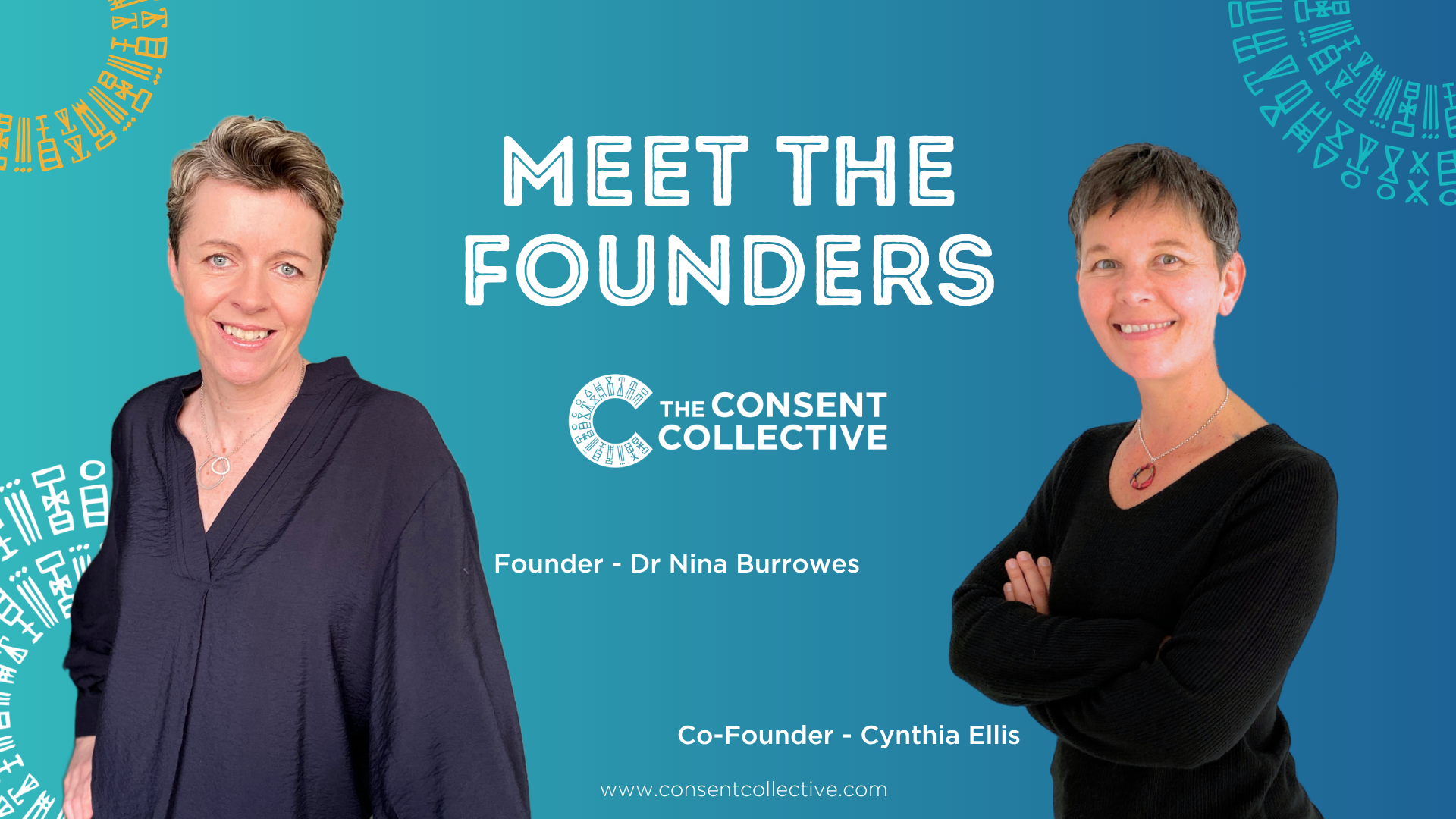
Nina Burrowes and Cynthia Ellis are the founders of the Consent Collective, a mission-led microbusiness helping organisations prevent and respond to sexual harassment through approaches informed by behavioural science.
Why did you first start your business, and how has it changed since the beginning?
I was already self-employed as a freelance researcher, but starting the Consent Collective was a shift towards something bigger than me. I wanted to use my time and expertise to improve responses to sexual harassment and, crucially, help prevent it. That called for an organisation built around a shared mission, rather than simply selling my time as a consultant. It meant bringing other people on board.
Like any business, we've evolved. In the early days, we worked with a large group of freelancers, bringing people together for creative projects and events. It was enormous fun. As the business developed, we realised that much of our core expertise came from my work as a psychologist. Today, Cynthia and I are the regular team, although collaboration remains central to what we do. I'd love to work with a wider group of freelancers again in the future.
We're celebrating our tenth birthday this year. At first, it was difficult to engage clients beyond the criminal justice sector. Then, following #MeToo, universities became a major part of our work, followed gradually by workplaces. We've become very good at taking our specialist knowledge into unfamiliar settings. One day I might be training police officers, the next speaking with students, and the day after working with people in manufacturing.
I've spoken about sexual harassment in lecture halls, Parliament, music festivals and comedy clubs. I love that range. Sexual harassment affects every part of society, so these conversations belong in all sorts of places. We're certainly not confined to the training room. We'll go anywhere to have these important conversations.
What is your current focus?
Preparing for a busy period! With new workplace sexual harassment legislation coming in the form of the Employment Rights Act and the positive duty on all employers to take all reasonable steps to prevent workplace sexual harassment from the end of October 2026, we're thinking carefully about what different organisations will need. Businesses vary enormously in size, sector and starting point, and each faces its own risks and opportunities for prevention.
We're developing resources to help as many organisations as possible make meaningful changes. We want to show what good practice can look like and give employers practical tools to live their values. For smaller businesses, our Safe Workplace Champion Programme is one option. It's a little like having a mental health first aider, but focused on preventing sexual harassment. Even one person with additional knowledge and skills can help a small organisation understand its risks and decide what support it needs. We're particularly pleased to have made the programme accessible to smaller businesses.
At the other end of the scale, technology helps us make training available more widely. We also have a train-the-trainer programme to equip facilitators to deliver this work themselves.
So we're getting ready for what could be a very busy couple of years!
What are you most proud of accomplishing so far?
Simply reaching our tenth birthday feels like a huge achievement. Many small businesses don't survive their early years, and we started at a time when preventing sexual harassment was far from a priority for most organisations. The fact that we're still here is worth celebrating.
But I'm equally proud of how we've built the business. For me, how you do the work is the work. We've stayed creative, curious and thoughtful about how we support people. I think clients are often struck by the compassion in our approach. We're not interested in telling people off or shaming them. We want to walk alongside them as they navigate a difficult and important subject.
What challenges are you currently facing?
Living in a rural area can make it difficult to connect with other businesses locally. Online, it's easy to build a global network, but that doesn't necessarily translate into relationships close to home. Since moving here, I've probably had four or five coffees with people in person and hundreds over Zoom!
That's one reason we wanted to connect with GrowBiz. We've made a conscious choice to live in this beautiful part of the country, and feeling connected to the place and its business community matters to us.
What support has GrowBiz provided?
Discovering GrowBiz has opened up an invaluable network here in rural Perthshire. We've met like-minded business owners and entrepreneurs, while gaining access to knowledge, resources and opportunities that can help our business grow.
What makes it particularly valuable is the opportunity to contribute as well as benefit. Through the mentoring programme, we've been able to share our own experience and knowledge with other businesses.
It's a genuinely supportive network where people can learn, connect and give something back.
How do you feel about what you do in your business?
When I started, I wondered whether working with such a heavy subject would be healthy for me. Some of those concerns were justified: sexual harm is difficult and sometimes deeply upsetting to confront. What I hadn't anticipated was how much joy and hope there would be in the work. We're helping people become the colleagues, managers and business owners they want to be. When someone handles a difficult situation well, especially one that means so much to the person involved, the positive ripple effects can be enormous.
The harm is the backdrop to our work, but so much of what we do is about helping people act with skill and compassion. And if our prevention work stops even a handful of incidents from happening, that's more than enough reason to get out of bed in the morning.
How do you feel about working for yourself in general?
I adore working for myself, both as a psychologist and as an individual. Running a business teaches you things about yourself that you might never have to confront as an employee. There's uncertainty about how each year will turn out, and real vulnerability in creating something of your own. But that makes it a remarkable learning experience.
I've also realised that no employer could look after me quite as well as I can when I'm running my own ship. Self-employment brings challenges, so it's important to make the most of its advantages too: the freedom to choose how, when and where you work.
I think small businesses make a distinctive contribution to their industries. We're probably one of the most creative organisations working in sexual harassment prevention, and our size is part of what makes that possible.
Being small gives us the freedom to experiment and respond quickly. It's a strength, not a disadvantage. I'm glad I've found such a creative and conscious way to spend my career.
Do you have some industry advice you can pass on to other small businesses or self-employed people? What should they be doing right now to prepare for the new legislation?
First, be aware of the legislation and what it requires. Small businesses have responsibilities to take proactive steps to prevent workplace sexual harassment, just as larger organisations do. It's important to think about risks involving colleagues as well as customers, service users, suppliers and members of the public. That can feel daunting, but a useful starting point is to consider the particular risks in your business and industry. Hospitality and catering, for example, can present distinct challenges.
It's also worth remembering the positive reasons for doing this work. Even a small business may employ people who have experienced sexual harassment or other forms of sexual harm. I've seen what it can mean to someone when their employer takes this seriously and makes meaningful changes. Feeling seen and cared for can make an extraordinary difference.
Take time to understand the legislation and consider what practical steps your organisation can take. One option is to identify one or two people who want to develop their knowledge through a programme such as our Safe Workplace Champion Programme. They can then help champion change within the business.
What’s next for you (big or small)?
I'd love us to host more events in our beautiful home town of Pitlochry. We don't just want to live here while doing our work elsewhere; we want to bring the work here too.
It would be wonderful to welcome people to workshops and training in this setting. Those of us who live here know it's worth the journey!
We also offer some free activities for people with lived experience of sexual harm, including our 'Healing from Injustice' process. We've previously held this in the gardens of Pitlochry Festival Theatre, and we'd love to do more of that locally.